Sunday, October 20, 2019

Review: The History of Mr. Polly by H.G. Wells (Classics Club Spin #21)


This book is on my Classics Club reading list and it came up on the Spin List (#5) this last time around. My heart most definitely did NOT leap up when I beheld this title come up for reading, but I decided to give it a whirl.

And let’s just say…. Low expectations are wonderful. You’re never disappointed, and frequently surprisingly pleased.


I would venture to say that most people (including me) have never heard of this book, so a little background is in order. The History of Mr. Polly is a comic novel published by H.G. Wells in 1910. It’s actually a late novel for him, coming after his more famous works. And the word “comic” is the tiniest bit misleading, for this is definitely not a slap-your-knee funny kind of book. But it is amusing in an often farcical kind of way. It’s also interesting because it’s supposed to be semi-autobiographical, based on Wells’ early years as a tradesman. So it’s definitely worth your time.

The novel opens in medias res, with Mr. Alfred Polly at a crisis point in his life. He’s middle-aged, fat and unhappy. He’s trapped in a loveless marriage and an unsuccessful business. So the first part of the novel is to merely show how he got to this point of desperation, and to be honest, the story is very slow to take off. I had to keep prodding myself to keep going with it and not give up prematurely.

But it did, in fact, take off eventually. Part of it is just getting used to Mr. Polly himself. He’s a dreamer, a little bit of a ne’er-do-well, and the type of person that gets into situations before he even knows what’s going on. A prime example of this is his marriage to Miriam, a cousin whom he doesn’t really love. In spite of this, he finds himself proposing to her before he knows what’s happening. And things don’t get any better after the wedding, as you might expect. To wit:

Miriam combined earnestness of spirit with great practical incapacity. The house was never clean nor tidy, but always being frightfully disarranged for cleaning or tidying up, and she cooked because food had to be cooked and with a sound moralist’s entire disregard of the quality of the consequences. The food came from her hands done rather than improved, and looking as uncomfortable as savages clothed under duress by a missionary with a stock of out-sizes.

I gradually realized that Wells injects a great deal of humor via Mr. Polly’s view of the world. Likewise, Wells uses a kind of running gag throughout the book in Mr. Polly’s propensity for making up words or misusing words he thinks he knows:

A man whose brain devotes its hinterland to making odd phrases and nicknames out of ill-conceived words, whose conception of life is a lump of auriferous rock to which all the value is given by rare veins of unbusinesslike joy, who reads Boccaccio and Rabelais and Shakespeare with gusto, and uses “Stertoraneous Shover” and “Smart Junior” as terms of bitterest opprobrium, is not likely to make a great success under modern business conditions. Mr. Polly dreamt always of picturesque and mellow things, and had an instinctive hatred of the strenuous life. He would have resisted the spell of ex-President Roosevelt, or General Baden Powell, or Mr. Peter Keary, or the late Dr. Samuel Smiles, quite easily; and he loved Falstaff and Hudibras and coarse laughter, and the old England of Washington Irving and the memory of Charles the Second’s courtly days. His progress was necessarily slow. He did not get rises; he lost situations; there was something in his eye employers did not like; he would have lost his places oftener if he had not been at times an exceptionally brilliant salesman, rather carefully neat, and a slow but very fair window-dresser.

Things get worse and worse for Mr. Polly, until we find him in the circumstances with which the novel opens. And it’s here that he decides he will set fire to his shop and commit suicide at the same time. Of course, he bungles the whole thing horribly, but then his fortunes finally take a turn for the better, and he eventually experiences happiness and redemption (not in a sappy way, but in a completely genuine and compelling turn of events that leaves the reader highly satisfied).

The final word should be given to Mr. Polly:

I’ve never really planned my life or set out to live. I happened; things happened to me. It’s so with everyone.

I’m not sure I agree with Mr. Polly here, but it is the perfect summation of his approach to life, and the reason I enjoyed this book as much as I did. I’m glad I read it and would probably re-read it.

Just FYI, interestingly there have been a few movie and TV adaptations of the story, including one as recently as 2007. So I’m thinking that may be worth a look as well.


Thursday, October 17, 2019

Review: The Testaments by Margaret Atwood

Popcorn and candy bars, or filet mignon -- which do you prefer?

Of course that’s something of a ridiculous question. If you’re like me, you love both, and they both are excellent treats, not meant for daily consumption. However, sometimes popcorn and candy bars make more sense, and junky food like that is what you want, and at other times filet mignon is what’s needed to make your soul complete.

I don’t know exactly what I was expecting from this sequel to The Handmaid’s Tale (THT). It was a good read, and I raced through it, but it felt like eating popcorn and candy bars, whereas reading THT feels like eating filet mignon. The author, Margaret Atwood, is undoubtedly in a very different place now (along with the entire world) than when THT was written back in the 1980’s, and I have to imagine that has something to do with it, but The Testaments (TT) feels very direct and plot-driven, whereas THT was more poetic and ambiguous. Some of that may have to do with the story itself -- June’s story in THT was created under circumstances that leant themselves to hiding, ambiguity, and even poetry and lyricism, whereas the accounts of the three women in TT are much more direct, having been made either from a place of power, both known and secret (Aunt Lydia) or from a place of relief and retrospectiveness (Agnes and Nicole).

Hopefully this is not too much of a spoiler at this point (in case it is, you are warned now). TT consists of the “testimony” of three pivotal characters from the world of Gilead:

  • Aunt Lydia, who it turns out, is a mole working against the power structure of Gilead by orchestrating the movement of information and refugees across the border into Canada;
  • Agnes, formerly known as Hannah, who is June Osborne’s first daughter, and who reluctantly but surely is breaking away from the iron grip of Gilead’s society and norms; and
  • Daisy, a young Canadian girl who eventually realizes that she is Baby Nicole, the long-lost pawn of the Gilead government in their media and propaganda attacks on Canada, who continues to be used as a pawn, but now by the resistance inside Gilead (being led, not incidentally, by Aunt Lydia).

Atwood beautifully begins the three stories as independent tales, but slowly begins to intertwine them in sometimes predictable but also surprising ways. Unlike THT, there is more of a real conclusion to the story in this book. It’s so definite that I would be tremendously surprised if there was a third book in this series. It also ends with another Gilead research symposium transcript as at the end of THT, which serves to flesh out even more of the ending of the story. However, I wonder if Atwood was being a little sneaky here -- did anyone else notice that these Gilead researchers were spending part of their time playing with Gileadean things, such as the Recreational Gilead Period Hymn Sing and the Period Costume Reenactment Day? It struck me as odd, and I have to wonder if this was Atwood’s way of warning us that even seemingly beneficial fascination with, and study of, historical periods can be like playing with fire, risking planting the seeds of repeating history. It just sounded too much like things like Civil War reenactors and all of that worship of the Civil War era, which is still very much with us.

Also, I was glad to see that Aunt Lydia really did have a soul in this book. We have gotten glimpses of that in the TV show, of course, but I always felt that there was more there, and TT gives some pretty satisfying answers to her motivation, although still on the popcorn level and not that of the filet mignon. The passages recounting the way in which Aunt Lydia became one of the founders of Gilead’s version of a convent were some of the most fascinating and satisfying in the whole book.

I think an interesting experiment now may be to reread both THT and TT in sequence. That might not be a good thing, because I don’t think Atwood really intended for that to be a thing, necessarily, but I’m just curious if the books would actually feel related in any way, or do you really need the TV show to fill in some of the mental gaps? Because I’ll be honest, while I was reading TT (and rereading THT a while back), images from the TV show irresistibly popped into my head while I was reading and colored it -- mostly in good ways, I think. But still. That’s a danger for a reader, and may be the source of the “popcorn” feeling with TT that I described earlier.

All in all, this book was well worth the read and I enjoyed it immensely.

Tuesday, September 17, 2019

Classics Club Spin List - September 2019

Greetings and salutations!

I know I have been gone for a month of Sundays or more, but I am back and ready to tackle some focused reading. Nothing focuses the reading urge better than a Classics Club reading list that has been withering on the vine lo these many months and (dare I say it) YEARS.

To add insult to injury, I looked at my self-imposed deadline for finishing the list -- AND IT'S A LITTLE OVER EIGHT MONTHS AWAY.

....MASSIVE PANICKED GULP.....

Well.

Never let it be said that I shirk from a challenge. Since I have done virtually NO reading on this list, there's no way to finish it. But how far COULD I get with it? If I started now?

A good way to start now (other than just starting, duh) is to participate in the Classics Club spin which is coming up next week. Here's the way this works: I pick 20 of the books on my list that I haven't read yet (BOY THAT WAS EASY) and list them here. To wit:


  1. Hadrian the Seventh -- Frederick Rolfe
  2. The Scarlet Letter -- Nathaniel Hawthorne
  3. The Call of the Wild -- Jack London
  4. Of Human Bondage -- W. Somerset Maugham
  5. The History of Mr. Polly -- H.G. Wells
  6. The Good Soldier -- Ford Madox Ford
  7. Vanity Fair -- William Thackeray
  8. Gulliver's Travels -- Jonathan Swift
  9. Dracula -- Bram Stoker
  10. Kidnapped -- Robert Louis Stevenson
  11. The Life and Opinions of Tristram Shandy -- Laurence Sterne
  12. The Rainbow -- D.H. Lawrence
  13. Frankenstein -- Mary Shelley
  14. Mrs. Dalloway -- Virginia Woolf
  15. Three Men in a Boat -- Jerome K. Jerome
  16. Nightmare Abbey -- Thomas Love Peacock
  17. The Golden Bowl -- Henry James
  18. The Wind in the Willows -- Kenneth Grahame
  19. Sybil -- Benjamin Disraeli
  20. Babbitt -- Sinclair Lewis

Then, next Monday, the Classics Club moderators will post a random number from 1-20, and that's the book I read from the above list. Simple! And Terrifying! I will NOT want to see some of those books on the list popping up to be read, but that's the fun part of this, I suppose.

Good luck to everyone participating (and me!!)!

*****

UPDATE: The spin number has been released and it's 5. That means my book will be The History of Mr. Polly by H.G. Wells. SIGH. I can't say I am even remotely enthused about this one. But I will soldier on and trust that there's something valuable there.

According to Wikipedia:

"The History of Mr. Polly is a 1910 comic novel by H. G. Wells. The protagonist... is an antihero inspired by H. G. Wells's early experiences in the drapery trade: Alfred Polly, born circa 1870, a timid and directionless young man living in Edwardian England, who despite his own bumbling achieves contented serenity with little help from those around him. Mr. Polly's most striking characteristic is his 'innate sense of epithet', which leads him to coin hilarious expressions like 'the Shoveacious Cult' for 'sunny young men of an abounding and elbowing energy' and 'dejected angelosity' for the ornaments of Canterbury Cathedral."

Image result for wut meme

This was actually one of Wells' later works, written after his more famous novels such as The Time Machine, The Invisible Man, The War of the Worlds, and others. So maybe it will be good. There are apparently more than a few people who regard it as one of his best works, so we'll see.

Monday, February 11, 2019

DMI2017, Week 29: "Mister Yummy" by Stephen King

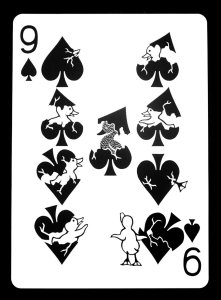
nine of spadesBazaar


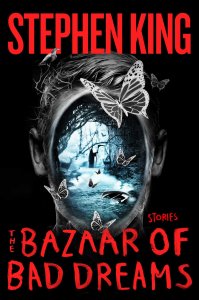
This week’s story, brought to us by the Nine of Spades, comes once again from Stephen King’s newest (I think) collection of short stories, The Bazaar of Bad Dreams. One of the things that makes this collection so interesting (besides, of course, the excellent stories themselves) is King’s short preface to each story, wherein he gives some background or insight into why he wrote the story or where he got the idea for the story.
For the story “Mister Yummy,” King recalls talking to a friend about wanting to write a story involving gay men in the era of AIDS. His friend told him that he probably didn’t have anything new to say about AIDS, especially as a straight writer. But King strongly disagrees, and this story bears out the validity of his viewpoint. King says that the power of the human imagination is such that anyone should be able to write a story about anything. He points out that when we talk about imagination, we’re really talking about empathy — it all just boils down to understanding what it’s like to be someone else. If we as a society have lost the ability of empathizing with others in our world, then there’s no hope for us. I completely agree with King here.
The other thing I liked about this story was King’s use of Poe’s “The Masque of the Red Death” as a sort of counterpoint to the events of the story. I took the opportunity this week to re-read that story, so in case you haven’t read it, here’s a brief synopsis: despite the best efforts of Prince Prospero to protect himself and everyone in his castle from the menace of the Red Death, he fails. One night during a masquerade ball, The Red Death sneaks in — disguised, oddly enough, as the Red Death.
In “Mister Yummy,” King turns the tables on Poe’s idea. In this story, Death appears as a beautiful, sexy, and utterly desirable young man who shows up one night at a gay bar in the era of AIDS. The story is being told many years later by Ollie Franklin, an elderly gay man living in an assisted living facility. Ollie and his friends nicknamed this young man “Mister Yummy,” and now Ollie is reminiscing about him because he has seen him in various places around the retirement home. The odd thing is, Mister Yummy looks exactly as he did the night Ollie first saw him, decades ago. He begins to think that Mister Yummy is really Death, and is coming for him soon. Every time he sees Mister Yummy, he’s closer and closer, and eventually he will show up in Ollie’s room, and that will be the end.
He tells all this to his friend, Dave, who is more or less incredulous. However, Ollie is insistent that he’s going to die soon, and wants to give Dave his most treasured possession, an antique pocket watch, so his good-for-nothing younger brother won’t get his hands on it. Dave agrees to take it, and soon after, Ollie is discovered in his room, having died peacefully in his sleep.
Dave, of course, has his own “Miss Yummy” that he remembers from his youth, a beautiful young redhead with a too-short skirt that had the propensity to ride up at opportune moments, and it’s not too long before he sees her standing next to the fountain outside the nursing home.
There’s not a whole lot more to the story than that, plot-wise, but this is a beautifully written story that definitely rewards the reader. I also found it a bittersweet meditation on aging and memory, as Dave thinks about his life in the retirement home, and what it all means.
Rating: 5 stars; I have a feeling this is a story I’ll be re-reading many more times.
Deal Me In 2017 is hosted by Jay at Bibliophilopolis.

Wednesday, July 19, 2017

DMI2017, Week 28: "Pit Stop" by John Floyd

Another week, and the Seven of Clubs is keeping me in the pages of Mississippi Noir, but honestly I feel like Brer Rabbit in the briar patch with it, so I'm good. (Bonus points for catching the reference there.)


And just for fun, here's a different take on the obligatory playing card image for this week:


This week's story, "Pit Stop," is told from the viewpoint of Anna McDowell, a young mother traveling with her two young children. They're on their way to Nashville to visit Anna's sister-in-law and they make a pit stop at a quickie mart. While there, they are accosted by a carjacker, but Anna has the wits and the self-defense skills to outsmart and overcome her attacker. The policeman who comes to get the information about the attack turns out to know Anna from years before, and he makes a cryptic remark: "Lightning can strike twice in the same place." Anna's daughter Deborah is intrigued by this remark and wants to know what it's about.

Anna tells a story about a Saturday during her college years, when she drove from Jackson, Mississippi to Starkville in order to attend a football game. She was traveling with her boyfriend Woody, but it was an uneasy trip because there was a serial killer (nicknamed the Night Stalker) on the loose. Worse, all the killings had taken place on the highway on which Anna and Woody were traveling. Before leaving Jackson, they see a policeman friend of theirs, Jack, who convinces them to take a hitchhiker named Mary with them. Mary turns out to be a nun (at least, she says she's a nun), and Anna is uneasy about this as well, because no one knows if the Night Stalker is a man or a woman. Maybe it's Mary...


During the trip the three of them happen to stop at the same quickie mart at which the story starts, and a series of unsettling events begins to take place. Mary suddenly disappears, but leaves behind a bracelet that she said she never took off. Woody tells Anna something that she knows is a lie, but is he purposely trying to lie, or just misinformed? Woody travels along this highway often for his job, and he's big and strong -- is he perhaps the Night Stalker?

I'm definitely not giving away any spoilers, but suffice it to say that this is a well-written story with lots of twists and turns. Of course Anna and Woody do meet up with the Night Stalker on their trip, and the explanation of who it is, is suitably satisfying. The story-within-a-story also gets wrapped up in a satisfactory way.

Rating: 5 stars, for the excellent writing and plotting.

Deal Me In 2017 is hosted by Jay at Bibliophilopolis.

Sunday, July 16, 2017

High Summer Readathon Plans


As she does every year, Michelle at Seasons of Reading is hosting the High Summer Readathon beginning today and running for the next two weeks, culminating in a 48-hour Christmas in July readathon the last weekend of the overall readathon. Well, this sort of thing is completely irresistible to me, so of course I signed up.

High summer means different things to different people, I suppose. Where I live, it means the onslaught of near-100% humidity, mosquitoes, and hurricane season. Other places it means the weather is finally getting nice. Here's how Matthew Arnold put it (from the poem "Thyrsis"):

Soon will the high Midsummer pomps come on,
Soon will the musk carnations break and swell,
Soon shall we have gold-dusted snapdragon,
Sweet-William with his homely cottage-smell,
And stocks in fragrant blow;
Roses that down the alleys shine afar,
And open, jasmine-muffled lattices,
And groups under the dreaming garden-trees,
And the full moon, and the white evening-star.


And here's even more summery Arnold goodness, from "The Scholar-Gipsy":

Here will I sit and wait,
While to my ear from uplands far away
The bleating of the folded flocks is borne,
With distant cries of reapers in the corn—
All the live murmur of a summer's day.


When you've said that, you need say no more!

But enough of that -- what am I reading during this readathon?
  • I will be finishing Sense and Sensibility for the Jane Austen Read-All-Along at James Reads Books;
  • I will be finishing The Moonstone by Wilkie Collins for my Classics Club list;
  • If I finish those two (which will be a feat), I'll use a random number generator to pick another title off my Classics Club list, since I am quite a bit behind on it.
  • For the Christmas in July weekend, I plan to read:
    • The Mistletoe Murder and Other Stories by P.D. James (just four stories, so this should be entirely manageable)
    • And something from my obscenely long TBR list on my Kindle: Christmas is Murder by C.S. Challinor
I'll keep you posted on my progress!

Saturday, July 15, 2017

DMI2017, Week 27: "Moonface" by Andrew Paul


For this week's short story, the Six of Clubs served up a mildly disturbing story by Andrew Paul, from the collection Mississippi Noir. Seems as if I'm having something of a run on stories from this collection, as often happens with Deal Me In, but I certainly don't mind because most of the stories in this collection are quite good.

The story's action centers on a man nicknamed "Moonface" by the kids at the school where he works on the cafeteria serving line. His real name is Yitzhak Cohen, and he's a Holocaust survivor. They call him "Moonface" because of the ugly circular scars visible all over his body. The unnamed narrator of the story, a high school kid, has multiple run-ins with Moonface, because as it turns out they both have their eyes on Nicole, a senior cheerleader.

After one too many humiliations at the hands of both Moonface and Nicole, the narrator decides that Moonface needs to go. He makes his way to Moonface's trailer on the edge of town, with no real plan in mind, and finds out that he has already lost Nicole -- Moonface and Nicole are clearly in an intimate relationship, one which her father then finds out about. So now there's ANOTHER person who has it in for Moonface, and the story spirals downward from there. As it turns out, the narrator does indeed play a pivotal role in getting rid of Moonface, but not at all in the way that he might have envisioned.

Rating: 5 stars; this is one of those stories that gradually sucks you in and begins raising the suspense as you watch the characters make one bad decision after another. An excellent read!

Deal Me In 2017 is hosted by Jay at Bibliophilopolis.

Sunday, July 2, 2017

DMI2017, Week 26: "Quitters, Inc." by Stephen King

This week the Six of Spades brought me another oldie but goodie from the pages of Night Shift.


Richard Morrison is a typical American businessman -- he smokes, drinks, and eats too much. One day he meets an old friend, Jimmy McCann, in an airport bar, and Jimmy looks great. He has stopped smoking, and he tells Morrison that it's due to the help of a fantastic place called "Quitters, Inc." They guarantee to help you quit smoking, and although he's skeptical, Morrison takes one of their cards from Jimmy. The only problem is, Jimmy can't talk about what Quitters, Inc. does to be so successful.

The business card resurfaces a month or so later, and Morrison decides to pay the offices of Quitters, Inc. a visit. He's introduced to a case manager named Vic Donatti. He tells Morrison that they employ no special techniques to help people quit smoking -- that they are pragmatists. What Morrison finds out only too late is, the pragmatic approach involves things like electric shocks, administered to his wife first, and then him, whenever he slips up and smokes a cigarette. And they'll know, because they will have him under constant surveillance. Further infractions would involve his son being visited by thugs to rough him up. And if Morrison gains weight as a result of stopping smoking (as most people do)? Well, Quitters Inc. has a pragmatic approach to solving that as well. At the risk of a spoiler, I chose the image of the Six of Spades above as a clue to what that approach might be.

Rating: 5 stars; "Quitters, Inc." is an entertaining but highly creepy story that shows King's ability to effortlessly weave an engrossing tale.

Deal Me In 2017 is hosted by Jay at Bibliophilopolis.

Thursday, June 29, 2017

John Dies at the End by David Wong

I haven't done a regular book review in some time here. Some weeks, it's all I can do to post a Deal Me In short story review. (And recent history asserts that even THAT was too much for several weeks in a row.) Recently I've been posting short reviews of books I've read on Goodreads, and that was OK for a while. But now I feel the need to write something longer on books.

It's unfortunate, however, that the book I choose to resurrect regular book reviews with is this one, mainly because it's a very hard book to describe to someone else. It's no understatement to say that John Dies at the End is one of the most unusual books I've read in a very long time. Evidently it has quite a cult following, and a movie has been made from the book. (It's on my Netflix queue, so I'm eager to see if it makes a little more sense than the book.) But I have to admit that it seemed a little uneven to me, and it would probably benefit from a rereading, if I had that kind of time (which I don't).


So how to summarize this book? Well, for starters, David Wong is the pseudonym of Jason Pargin, who is the executive editor at Cracked.com, which is your first clue about what kind of book this might be. Read his Wikipedia page for the interesting back story of how all this came to be.

The action of the story takes place in [Undisclosed]. (This is what it's called throughout the book.) There's a pair of protagonists, John and Dave, and they have some special powers that allow them to do all kinds of things, not the least of which is to see and interact with creatures and other entities from other dimensions -- what we might otherwise call monsters, although as the events of the book play out, that word is way too simplistic for these things. John and Dave have these powers due to a drug-like substance called "soy sauce." It appears out of nowhere in small metal canisters that are cold to the touch even in the middle of summer, and when you take it, it changes you in all kinds of strange ways.

"Soy sauce," NOT "soy sauce."

Oh, and there's also a dog, Molly, that figures prominently in the plot, but she has an annoying habit of exploding, among other things. In fact, many of the characters in this story keep dying in odd and interesting ways, but they keep coming back. There's also issues with time and the order of events in this story, which doesn't surprise the reader once it's made clear that more that one dimension is involved. But I have to say that it can be very confusing at times.

Molly can even drive.

The upshot of the plot, without giving too much away, is that there is a being from another dimension who goes by the name of Korrok, and who is very interested in taking over the beings and worlds in this dimension. To do this, he sends all kinds of monsters to achieve this purpose, as well as taking control over ordinary people, turning them into various monsters.

Even though my brief synopsis sounds truly like the hottest of hot messes, this is a pretty funny book, even if the humor is often black humor. And it's definitely not like anything else I've ever read. I have to admit that the author was very inventive with what could have otherwise been an ordinary story. And along the way, he manages to work in some pretty interesting philosophical questions that arise from the events of the story.

My major problem with the book is that I feel like it began well -- funny and weird and intriguing -- and ended pretty well (with some major revelations that I simply didn't see coming) -- but the middle part of the book seemed disjointed, or even sort of like filler. This is why I think I might like to read the book again, to see if I just missed something in the middle that would make more sense now that I know the basic arc of the story.

Rating: 4 stars; I'm glad I read this unique book, even though (spoiler) John does NOT die at the end.

Tuesday, June 27, 2017

DMI2017, Week 25: "On the Hill" by Elizabeth Spencer

This week I successfully got back on my Deal Me In reading schedule, pretty much. The deck of cards dealt me the Four of Hearts, which sends me back to my list of Mississippi authors (in honor of the Mississippi bicentennial) and a story by Elizabeth Spencer. I read another story by Spencer earlier this year ("A Southern Landscape," Week 12), and this story, "On the Hill," was very different from that one. I suddenly realized that she has the distinction of occupying two spots on my roster of Mississippi authors, along with Faulkner and Welty. That was not by design -- I think it was more about what was available to me in terms of reading resources, although I did buy Starting Over, the collection in which we find this story, specifically for Deal Me In this year.


The title of this story refers to the location of the house of Barry and Jan Daugherty, recent transplants to the small town of Eltonville. They are a bit aloof and more than a little mysterious, but everyone who's anyone in town loves to attend their elegant dinner parties.

Eva Rooke and her husband Dick are some of the Daughertys' guests, and Eva especially begins to be sucked into something of an obsession about figuring out who the Daughertys really are. This is because she sees certain things that make her wonder just what exactly is going on. One day she sees Barry coming out of the Holy Brotherhood of Jesus church, a strange cult on the edge of town. On another day, the Daughertys' son Riley shows up at Eva's front door after school, saying that his mom has gone away and he can't get in his house. Upon investigation, Eva discovers that Jan is inside the house, apparently drunk and passed out. The story gets more and more enigmatic from there, with Eva never really figuring out what the Daughertys were all about, even long after they suddenly move away.

Rating: 4 stars; I liked this story even though I feel like I didn't really understand it. I am still relatively new to Spencer's writing, and I enjoy her style. In this story, she also did an excellent job of pulling the reader into Eva's thoughts, curiosity, and confusion about the Daughertys. I still plan to read more of her work.

Deal Me In 2017 is hosted by Jay at Bibliophilopolis.

Sunday, June 25, 2017

DMI2017: More Catching Up (Weeks 21-24)

This group of four stories brings me up to the end of last week, so I am officially caught up now. And it's definitely a mixed bag of stories!


Week 21: "Why I Live at the P.O." by Eudora Welty
Card: Two of Hearts (Mississippi authors)
Collection: The Collected Stories of Eudora Welty
How have I missed this story all these years? I know that it has been widely anthologized and whenever one mentions Welty, this story usually comes up. In addition to being a famous author, Welty was also known for her photography, and supposedly this story was inspired by one of her photographs showing a woman ironing in the back of a post office. This is a truly funny story of sibling rivalry and the ways in which it can cause family relationships to go all to hell. I'm sure I'm not the first person to think of this, but I definitely saw glimpses of the Biblical parable of the Prodigal Son in this story. But more than anything else, I just wallowed in the Southern cadences and turns of phrase that Welty uses all throughout the story.

Rating: 5 stars, no contest!


Week 22: "The Apprentice" by Larry Brown
Card: Seven of Hearts (Mississippi authors)
Collection: Big Bad Love
When I put together my list of Mississippi authors for my Hearts suit, I'm ashamed to say that I didn't actually know many beyond the obvious ones like Welty, Faulkner, and Wright. So I started googling and came up with a pretty long list of authors born or raised or living in Mississippi, and Larry Brown was on that list. He passed away in 2004, but in his lifetime he was a pretty notable author and won many awards, including the Mississippi Governor's Award for Excellence in the Arts, as well as the Southern Book Award for Fiction. He hailed from Oxford, Mississippi and became known for his gritty, down-to-earth stories and novels.

This story, "The Apprentice," was actually pretty funny, but with an undercurrent of darkness and despair. Lonnie and Judy are a married couple who, according to Lonnie, at least, were happy until Judy decides she's going to become a writer. She writes all the time, which is actually OK with Lonnie, except that he begins to read some of her stuff and it's completely awful. (Her story "The Hunchwoman of Cincinnati" is what finally leads him to realize that she's a terrible writer.) The problem is, if he tells Judy the truth about her writing, she becomes unhinged; if he lies and says it's great stuff, then they have amazing sex. So he's in-between the classic rock and hard place.

Rating: 5 stars; I really liked Brown's tone and style, and I am very eager to read more of his stuff.


Week 23: "How To Become a Mars Overlord" by Catheryanne Valente
Card: Queen of Diamonds (Science fiction/Fantasy)
Collection: Twenty-First Century Science Fiction
This was one of those stories that I really wanted to like. The premise is irresistible: the "story" (really more of a humorous essay) consists essentially of instructions on how to become a Mars overlord, with examples of those who have gone before you. It's true that there's only one Mars in our solar system, but apparently every solar system in the Universe contains a Mars-like planet, just ripe for the taking by any enterprising overlord. The sections of the essay include: "Welcome, Aspiring Potentates!", "Query: Why Mars?", "Step One: Get to Mars," and "Step Two: Become an Overlord."

Rating: 3 stars; I wanted to like this story, but I didn't really because it was not a story. The title was the best part. The essay consisted of tale after tale of Mars overlords and what they were like and what they did to conquer their Mars, and in the end I just found it all very confusing.


Week 24: "My Dear, My One True Love" by Lee Durkee
Card: Ten of Clubs (Mystery/Detective set in Mississippi)
Collection: Mississippi Noir
This is another story that's not a story (have I missed something somewhere in the rules of modern fiction?) but it's entertaining nonetheless. It's an ode to the crazy woman. It begins: They have the most beautiful eyes, crazy women do, differing tints and gleams, true, but always that pinprick of wilding incandescence, the swamp gas rising. Of course, relationships with crazy women don't end well. And with no risk of a spoiler, here's the end of the story: Life goes on in this manner until someone gets led away in handcuffs or we find ourselves late at night once again shoveling away under the Mississippi stars, my dear, my one true love.

Rating: 4 stars; even though it's not really a story in my opinion, it was well-written and humorous, always pluses to me.

Deal Me In 2017 is hosted by Jay at Bibliophilopolis.

Tuesday, June 20, 2017

DMI2017: Catching Up (Weeks 17-20)

Funnily enough, I think it was just about this time of year, two years ago, that my Deal Me In reading plan went belly-up. What is it about the summer that is so fatal to DMI? Maybe it's just me, but I bet I'm not alone in this. For me, vacation and time away from my normal environments generally result in less reading, not more. And over the last two months, I've been gone from home about half of that time.

So now I am faced with playing some catch-up because I'm determined not to let my DMI roster die another ignominious death -- even cats have only a limited number of lives, and who knows if DMI is the same way?

I've decided that the best way to deal with my backlog is to do mini-reviews of the stories I'm behind on, eventually bringing my roster back to a state of currency. So here goes!


Week 17: "Combustible" by Ace Atkins
Card: Queen of Clubs
Collection: Mississippi Noir
Shelby is a high-school freshman who is trying to run away from home. Her stepfather is abusive and her mother (and pretty much everyone else) is turning a blind eye to the abuse. Lucky for Shelby, there's a leaking gas valve under her house that might just solve her problem.

Rating: 5 stars for plot and atmosphere


Week 18: "Jerusalem's Lot" by Stephen King
Card: Two of Spades (Stephen King old and new)
Collection: Night Shift
An oldie but a goodie, written in epistolary style. Charles Boone comes into possession of Chapelwaite, his family's historic estate. But of course weird things start to creep into the tale, such as things moving around inside the walls of the house (rats, surely). And there are local legends of sinister goings-on at a nearby abandoned town called Jerusalem's Lot. Charles discovers that one of his ancestors played a pivotal role in some strange events at Jerusalem's Lot, and not only that, but this ancestor may still be around almost a hundred years later.

Rating: 5 stars, mostly for the expert way King replicates the tone and style of an 18th or 19th century epistolary novel.


Week 19: "Escape to Other Worlds With Science Fiction" by Jo Walton
Card: Jack of Diamonds (Science fiction/Fantasy)
Collection: Twenty-First Century Science Fiction
This is a very short, entertaining story of alternate reality, where World War II turned out very differently. Germany and Japan are still aggressive world powers, and the U.S. is still mired in the Great Depression. Short vignettes tell the story of the desperation experienced by various individuals, with longer vignettes depicting the story of Linda Evans, a waitress working a dead-end job. One day she encounters an opportunity to improve her lot, but it would involve betraying her employers, who might be Jewish. The title of the story comes from newspaper headlines and story excerpts interspersed throughout the story. Some of the headlines are ads for science fiction books written by names such as Asimov and Heinlein.

Rating: 3 stars; I liked this story and found it pretty creative -- but then again I'm a sucker for tales of alternate history. However, I didn't quite "get" the story, and I felt that it wasn't actually a complete story, not really going anywhere.


Week 20: "Man of All Work" by Richard Wright
Card: Five of Hearts (Mississippi authors)
Collection: Eight Men
An interesting story from one of the more widely-known authors in the pantheon of Mississippi writers. Carl and Lucy are a black couple with two small children, and they are worried about being behind on their house payments. There's no prospect of things getting better anytime soon, because Lucy is on bed rest after the birth of their second child, and Carl can't find work despite being skilled as a cook. Against Lucy's wishes, Carl decides to dress up in her clothes and apply for a job as a maid with a white family. What starts out as a light, amusing, and intriguing premise for a story suddenly turns dark and complex as Wright skillfully explores deeper issues of race, class, and sex.

Rating: 5 stars; this was a fascinating and compelling story, delivering much more to think about than I thought it would at first glance. Plus, it's written entirely in dialogue, so that's another interesting angle.

Deal Me In 2017 is hosted by Jay at Bibliophilopolis.

Tuesday, April 25, 2017

DMI2017, Week 16: "Circe" by Eudora Welty

This week the Queen of Hearts came up in my card deck. Hearts is the suit chosen for Mississippi writers, in honor of the state’s bicentennial this year. It seems fitting that I matched this particular card with the story “Circe” by Eudora Welty (from The Collected Stories of Eudora Welty). This story is a captivating retelling of the story of the witch Circe and her encounter with Odysseus, as told in Homer’s Odyssey.


The basic story is this: Circe lures Odysseus’ men off their ship and entices them to drink a potion that turns them into pigs. One of the men escapes, however, and warns Odysseus of the impending trap if he comes to rescue his men. He is further warned by Athena (via Hermes, the messenger) to protect himself from Circe with the magically protective herb moly. He does, and after rescuing his men, he sleeps with Circe and ends up staying for a year with her.


Welty stays true to the story as initially told by Homer, but what makes this story so intriguing is, of course, her use of language and the way she covers the events of the story. The entire story is told from Circe’s point of view, so that we get the other side of the story, as it were. For example, I was taken by this passage, which occurs after Circe realizes that Odysseus is not going to succumb to her spell:

Before I’d believe it, I ran back to my broth. I had thought it perfect – I’d allowed no other woman to come near it. I tasted, and it was perfect – swimming with oysters from my reef and flecks of golden pork, redolent with leaves of bay and basil and rosemary, with the glass of island wine tossed in at the last: it has been my infallible recipe. Circe’s broth: all the gods have heard of it and envied it. No, the fault had to be in the drinker. If a man remained, unable to leave that magnificent body of his, then enchantment had met with a hero. Oh, I know those prophecies as well as the back of my hand – only nothing is here to warn me when it is now.

This story was truly a treat. I don’t think it’s one of Welty’s better-known stories, but it certainly is worth the read, and deserves five stars for the writing.

Deal Me In 2017 is hosted by Jay at Bibliophilopolis.

Monday, April 17, 2017

DMI2017, Week 15: "Darkness Box" by Ursula K. Le Guin

This week I was led back to Masterpieces of Fantasy and Wonder by the selection of the Three of Diamonds. However, the resulting story choice, “Darkness Box,” is anything but a masterpiece, in my opinion. I had high hopes for this story because, even though I have never read anything by Ursula Le Guin, I knew of her status as one of the most famous living science fiction and fantasy writers. However, this story did not do her justice, I’m afraid (or let’s say, I hope!).


The story opens as a little boy, Dicky, finds a box that has washed up on the shore. Dicky’s mother, a witch, asks what is in the box. “Darkness,” he replies, and she tells him to be careful with it.

Meanwhile, in another part of the land, Prince Rikard is fighting off his rebellious brother’s forces, and none too successfully. Retreating back to his father’s castle, he passes by the witch’s hut, and meets up with her. She calls for Dicky who offers the box to the Prince, but the Prince refuses it, saying all “seagifts” belong to the king. So he takes the darkness box to his father, who is horrified by the gift. It turns out that the box belonged to him once, and he threw it into the sea to get rid of it. He won’t take the box back, and warns his son to keep it locked and never open it. It is no spoiler to tell you that the Prince does open it, but the effects of the box are not exactly what one expects.

This was not a horrible story, but it’s not one to which I’ll return. I will note that, according to the copyright information in the anthology, this story was first published in 1963, which appears to be near the beginning of the time Le Guin began publishing her stories. So perhaps it is a youthful effort that is not terribly representative of her larger body of work. It’s a story that rates only three stars with me.

Deal Me In 2017 is hosted by Jay at Bibliophilopolis.

Sunday, April 9, 2017

DMI2017, Week 14: "Chicken Little" by Cory Doctorow

The Ten of Diamonds was the card for this week, and it introduced me to a most intriguing story by Cory Doctorow from the collection 21st Century Science Fiction.


We all know the story of Chicken Little and "the sky is falling." It's one of those folk tales whose origins have been lost in the mists of time. What is most interesting is how the basic premise of the story (don't overreact to insignificant events and fall into paranoia and hysteria) has been reworked and reimagined over the centuries.

This story is a fine example of a futuristic scenario in which mass eradication of fear and uncertainty (via pharmaceutical means) is finally a possibility -- but of course the fundamental question is, is this ethical? Is this even good for the human species, understanding that much of our evolution and development has been shaped by that very same fear and uncertainty?


The story's protagonist, Leon, has begun work at an ad agency called Ate. This agency, like many others, seeks to cater to ultra-wealthy individuals who have achieved a version of immortality. As their bodies fail, they move into vats, and are kept alive by the latest scientific developments and hundreds if not thousands of employees who become their "bodies." Still perfectly conscious, they continue to conduct business in this way and become even more wealthy and powerful. So if an ad agency such as Ate can sell even one thing to these individuals, its reputation (and income) is set for life.

This is what has happened to Ate. Long ago, the agency made a sale to one vat person, and the income from that sale has kept the agency going for a long time, and not just with bare-bones accommodations. Ate's offices are in a lavish, state-of-the-art complex and no need of its employees is ever denied. They don't actually have to ever make another sale, that's how good the first one was. The employees do whatever they want to, and are free to pursue any kind of lead that might lead to another sale. And if they could make one more sale, it would cement the agency's existence forever, So this has become the holy grail of the agency, and many employees have come and gone in what has turned out to be a fruitless pursuit. When a person such as one of the vat people needs literally nothing, what can you possibly sell them? So Leon's goal, as is the goal of everyone at Ate, is to figure out what that could be.

One day Leon meets with Ria, an envoy of one of the vat people. She represents Buhle, who went to his vat at 103, the youngest age ever for one of these individuals. It was apparently due to some kind of "accident," and as the story unfolds, this accident becomes critical to the climax of the story. Also, as it turns out, Leon is actually being courted by Buhle, who knows of his past history and also has an idea of what Leon can sell him. During his grad school days, Leon hit upon a new type of drug that allows humans to make cold, rational calculations about events. Taking this drug, no one would ever buy a lottery ticket, for example, because they would know instantly that their chances of actually winning were almost zero. Buhle's idea is that the drug would release humanity from its fear and uncertainty and usher in a new era of optimism and progress. But Leon's resistance to his own creation is that it would also take away many of the things that make human existence so ultimately rewarding in the first place.

I don't want to give any more of the story away, of course, but there are many, many layers to this excellent story which makes it well worth reading. It's definitely a five-star story.

Deal Me In 2017 is hosted by Jay at Bibliophilopolis.

Friday, March 31, 2017

DMI2017, Week 13: "Evil Robot Monkey" by Mary Robinette Kowal

This week's card, the Eight of Diamonds, leads us to a very short and intriguing story from the collection Twenty-First Century Science Fiction.


"Evil Robot Monkey" is one of those stories that gets into my Deal Me In roster solely due to its title. Who could resist wanting to know what that title means? However, having finished the story, I am still not sure.


The story centers on Sly, a chimpanzee who has been altered with some kind of brain transplant that makes him hyper-aware of his interactions with humans. In fact, the story is told from his point of view, showing that he very much has what we would recognize as human consciousness. He even creates beautiful pottery on a pottery wheel in his enclosure. But there's the rub -- he's a fully conscious animal in what appears to be a zoo. One day he's startled by a group of schoolchildren and ruins the pottery he's working on. He flies into a rage and acts out, scaring and embarrassing the children and their teacher, who complains about the "evil robot monkey."

One of Sly's keepers, Vern, is sent to talk to Sly (through sign language) and explain that he has to be disciplined for his behavior, which involves taking away the clay for his pottery. Their conversation reveals that Vern actually "gets" Sly, unlike most people, which makes Sly trust Vern and accept the punishment. But between them, they figure out a way to get around the punishment so Sly can still make pottery.

In the brief introduction to "Evil Robot Monkey," the collection's editors make the statement that this story is "a reminder that it's possible to tell a fully-realized SF story in fewer than a thousand words." That may be true in general, and this story is definitely short, being just a couple of pages long, but I am not sure it succeeds in being a fully-realized story. It's an interesting story, but it seems very bare bones and left way too many unanswered questions for me, with the result that it feels very incomplete. However, it's well-written so it gets four stars from me.

Deal Me In 2017 is hosted by Jay at Bibliophilopolis.

Monday, March 27, 2017

DMI2017, Week 12: "A Southern Landscape" by Elizabeth Spencer

This week we embark on my reading list of Mississippi authors, thanks to the Ten of Hearts. I don't have any particular anthology from which to pull these stories -- instead, I made my list of authors and cobbled together some of their stories from various sources. (It gave me a good excuse to buy more anthologies, in a few cases.)


This week's story, "A Southern Landscape," comes from the anthology Growing Up in the South, and was the first story by Elizabeth Spencer that I've ever read. After this one, I think I need another anthology for my library! Spencer is possibly best known for her novella "The Light in the Piazza," which has been the basis for both a movie and a Broadway musical.

"A Southern Landscape" focuses on the story of Marilee Summerall, a teenaged girl who lives in the small town of Port Claiborne, Mississippi. Interestingly, the Port Claiborne of the story is a thinly-veiled stand-in for the real-life town of Port Gibson, Mississippi, which I visited a few years back. It's a beautiful, historic town that, despite figuring prominently in the Civil War as the site of a battle that was probably the beginning of the end for the Confederacy in Mississippi, was remarkably preserved throughout the war. Reportedly, this is because Ulysses S. Grant himself said that the town was too beautiful to burn, so it wasn't. In the story, Spencer makes mention of the famous golden hand pointing to Heaven atop the steeple of the First Presbyterian Church, and some of the action of the story takes place at the nearby ruins of Windsor.

The famous Golden Hand on the top of the
First Presbyterian Church steeple in Port Gibson, MS

The iconic ruins of Windsor

These sights and many others make up the "southern landscape" referred to in the title, a landscape not only in reality but of the heart and soul as well. Spencer's beautiful, evocative writing makes this clear:

Coming down the highway from Vicksburg, you come to Port Claiborne, and to get to our house you turn off to the right on State Highway No. 202 and follow along the prettiest road. It's just about the way it always was -- worn deep down like a tunnel and thick with shade in summer. In spring, it's so full of sweet heavy odors, they make you drunk, you can't think of anything -- you feel you will faint or go right out of yourself. In fall, there is the rustle of leaves under your tires and the smell of them, all sad and Indian-like. Then in the winter, there are only dust and bare limbs, and mud when it rains, and everything is like an old dirt-dauber's nest up in the corner.

So set against this landscape we have Marilee's story and her brief infatuation with Foster Hamilton, a boy a few years older than her. She calls him "Benjy" after the "big, overgrown idiot" character in Faulkner's The Sound and the Fury -- not because he's necessarily so big or overgrown, but he does often behave like an idiot. Mainly, Foster likes to drink, and it gets him into some awkward and embarrassing situations. The biggest situation occurs when Foster takes Marilee to her senior dance, and he's already two sheets to the wind, They leave the dance after about ten minutes because he's teetering "like a baby that has caught on to what walking is, and knows that now is the time to do it, but hasn't had quite enough practice," Outside, Foster falls into a ditch because he is so drunk, and Marilee has to drive him around in his car (not actually knowing how to drive before that night) until it gets late enough to go home without anyone being suspicious that the evening didn't go exactly as planned.

There's much more to enjoy in this pretty humorous story, especially Spencer's writing and her many Southern turns of phrase. The story is written in Marilee's voice, so it feels exactly like she is sitting down with you on the front porch and telling this story. It's worth five stars for sure.

Deal Me In 2017 is hosted by Jay at Bibliophilopolis.

Sunday, March 26, 2017

DMI2017, Week 11: "God's Gonna Trouble the Water" by Dominiqua Dickey

This week the Five of Clubs took me back to the collection Mississippi Noir and a gut-wrenching story by Dominiqua Dickey.


The story takes place in Grenada, Mississippi, a small town in north Mississippi, in 1936. Most people are well aware of Mississippi's long and difficult racial history, and that history infuses this story in a powerful way. The story begins as the main character, Elnora Harden, gets a panicked visit from Cissy, her young cousin. Cissy has lost her baby Hattie, who has actually been taken by her father, Graham Lee. The problem here is that Cissy is African-American and Graham Lee is white, and this is 1936 Mississippi. 'Nuff said about the million and one ways that sets this plot spinning.

Cissy and Graham Lee are under the impression that no one in the town knows about their romance and child, when of course everyone does. So when Hattie goes missing, it's not hard for Elnora to recruit help, mainly from Graham Lee's uncle, Rayford. To complicate matters even further, it's clear that he and Elnora have some kind of history, but it's not exactly clear what that history might be.

Elnora and Rayford finally find Hattie after a desperate search in a raging storm. She's found safe, but Graham Lee and Cissy are making plans to leave town, to find somewhere that they can be a family without judgment from others, and they ask Elnora to take care of the baby until they can come get her. She does of course, and this makes a happy ending for Hattie, but no one else in the story gets their happy ending. And after all, it is noir.

This would be an interesting and dramatic story all by itself, but it is made ten times more so by the background events, namely that much of the action takes place in a terrible storm that sets the mood perfectly. The storm also plays a major role in the climax and denouement of the story. At one point, one of the characters says of the storm, "It ain't letting up," and that could certainly describe Elnora and her actions as well.

The title of the story speaks volumes to the plot, and it is a reference to an old spiritual, "Wade in the Water," about the children of Israel being led out of Egypt by Moses. Here's an interesting take on the song:


This was a long and sometimes complex story due in part to all of the relationships (both stated and implied) between the characters, but I enjoyed it immensely. It definitely rates five stars with me.

Deal Me In 2017 is hosted by Jay at Bibliophilopolis.

Saturday, March 11, 2017

DMI2017, Week10: "Children of the Corn" by Stephen King

This week I had another blast from the past with another story from the Stephen King collection Night Shift, chosen for me by the Five of Spades.


Burt and Vicky Robeson have a marriage in trouble. They're ostensibly in the middle of a road trip to see Vicky's brother, but in reality they are trying to save their marriage by being cooped up in a car together for 1500 miles plus. And it's not going terribly well when they leave the turnpike and get lost somewhere in Nebraska, "three hundred miles of corn," as Burt quips.

But lest we get too mired in the Robesons' marital problems, King almost immediately turns up the heat. While arguing about the road map with Vicky, Burt hits something in the road that he hopes is a dog. Unfortunately, it turns out to be a young man whose throat has been cut. Although they are definitely freaked out at this point, Burt and Vicky decide to take the boy's body to the nearest town and alert the local police.

Here's where the weirdness begins, however. The nearest town is called Gatlin, and immediately upon arriving there, Burt and Vicky know something is very wrong. For one thing, it appears deserted, and not just recently deserted -- like 10 or 15 years deserted. Prices on gas pumps are way out of date, and a calendar Burt and Vicky find in a diner reads August 1964. And yet, on the way into town they heard a local radio preacher broadcasting, and the sign on the town church has a sermon title dated the Sunday before. So there ARE people in Gatlin, but something is off for sure.

When Burt goes into the church, leaving Vicky alone outside in the car (his second mistake, right after the one where he stops in Gatlin), he rapidly understands what is wrong. The town is in the clutches of a religious cult that worships someone -- or something -- that lives in the cornfields surrounding the town. And judging from a book he finds in the church, this cult makes regular sacrifices to this something, with the result that there is no one in the town older than 19. Everyone else has been murdered or sacrificed.

And now things really heat up, as a flock of murderous children (the Children of the Corn in the story's title) descend upon the car outside the church and try to kill Vicky. Burt tries to help her but is chased into the cornfields, where he eventually comes across some very disturbing things, including the something that lives out there.

This is a suspenseful, horrifying story that is classic King in every way. The story was the basis of a 1984 movie by the same name, and which spawned eight sequels according to Wikipedia. I haven't seen any of them, but the original movie is readily available on YouTube, as well as the trailer:


Anyway, I highly recommend this story and it's well worth five stars.

Deal Me In 2017 is hosted by Jay at Bibliophilopolis.